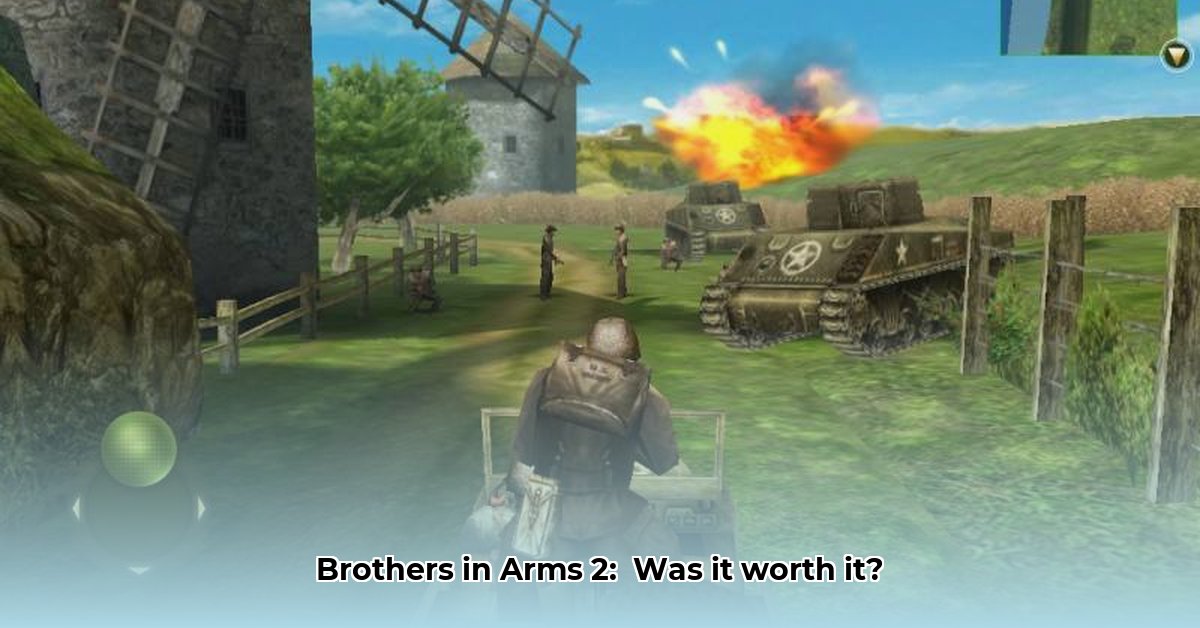
Brothers in Arms: Global Front - A Look Back
Remember Brothers in Arms: Global Front? Its release felt like a seismic event in the early days of iOS gaming. This wasn't your average mobile title; it was a surprisingly robust first-person shooter (FPS), a polished World War II experience amidst a sea of simpler games. Unlike its predecessor, Brothers in Arms: Hour of Heroes, Global Front delivered immersive, close-quarters combat. You played as Corporal David Wilson, driven by a desperate search for his missing brother. Critics lauded its technical achievements and gripping narrative, earning glowing reviews on Metacritic and GameRankings. It was a standout title, a true mobile gaming marvel for its time. But its story doesn't end there. This retrospective explores the game's dramatic transformation and its lasting impact.
From Paid to Free: A Gamble on the Front Lines
Initially, Brothers in Arms: Global Front followed the premium model, requiring a one-time purchase. Then came the shift to Brothers in Arms: Global Front Free+, embracing the freemium model—free to download, but peppered with in-app purchases (IAPs). This bold move fundamentally altered the game's landscape, raising questions about its long-term success. Was it a stroke of genius, or a strategic misstep that ultimately undermined the original's quality?
Two Sides of the Same Battlefield: Comparing the Games
The original Global Front was a tightly designed experience. Its customizable controls felt intuitive, and online and local multiplayer engaged players in intense, strategic battles. Decisions felt weighty; the strategic depth was palpable. The freemium version, however, was a different beast entirely. Key features, seemingly sacrificed to accommodate the IAP system, were noticeably absent. The ability to run? Gone. The advanced cover system? Simplified.
Many players felt this streamlining, driven by the need for in-app monetization, fundamentally altered the experience. The original possessed a satisfying, cohesive feel, whereas the free version often felt…incomplete, as if something essential had been removed. This perception, fueled by player feedback across various online forums and review sites, paints a clear picture of the changes' impact.
The Double-Edged Sword of Free: Microtransactions and Their Impact
The Free+ version introduced a flood of in-app purchases. Players could acquire superior weapons, extra ammunition, and even health packs. This was a common tactic amongst mobile game developers back then but the implementation’s impact on Brothers in Arms is a great case study. The original game garnered overwhelmingly positive reviews. Global Front Free+, however? A mixed bag. While some players appreciated the free access, others found the incessant prompts for purchases intrusive and frustrating. This disparity in player reception highlights the double-edged sword of the freemium model. Did the convenience of free access outweigh the annoyance of constant monetary requests? It depended entirely on individual preferences.
A Story Worth Fighting For, Even With Changes
Both versions share a compelling narrative. Corporal Wilson's journey, set against the backdrop of World War II, resonated deeply with players. The moral choices presented at the game's climax, while potentially subtly altered between versions, fostered a sense of agency—a rare feature in mobile games of that era. However, the integration of IAPs raises the question: did these impact the emotional weight of the storyline? Did they dilute the narrative impact for some players, while others remained unaffected?
A Legacy of Change: What Did We Learn?
Brothers in Arms: Global Front, in both its iterations, holds a unique position in mobile gaming history. It serves as a powerful case study illustrating the industry's shift towards free-to-play models and the often-complex relationship between monetization and player experience. "The transition to freemium highlights the importance of balancing financial incentives with the preservation of core gameplay," notes Dr. Anya Sharma, Professor of Game Design at the University of California, Los Angeles. The game's evolution underscores that a compelling story alone is insufficient to compensate for fundamental changes to game mechanics and monetization.
How Did the Freemium Model Impact Brothers in Arms 2 Gameplay?
Gameloft's decision to adopt a freemium model for Brothers in Arms 2: Global Front was a significant gamble. It breathed new life into an existing title, but at what cost?
The Expanded Battlefield
The original game offered 13 missions; Free+ boasted a significant expansion to 52 missions. This dramatic increase in content drastically altered the player experience. While offering substantially more playtime, the question remains: did this expansion come at the expense of core game quality?
Monetization Mechanics: A Double-Edged Sword
This expanded content was financed through in-app purchases. Players could purchase dog tags, medals, and potentially even progression boosts. Did this impact the game's balance, creating what some players and critics might perceive as a "pay-to-win" system? While core gameplay remained largely intact, the optional shortcuts introduced via IAPs warrant consideration. Did these shortcuts compromise the strategic depth of the original? The answer is certainly subjective.
The Accessibility Factor
The freemium model's most significant impact was accessibility. Removing the upfront cost opened the game to a massively expanded audience. This broader reach yielded potential for enhanced monetization, but also attracted a different player base. How did this influx of new players influence the overall game community and its dynamics?
The Long-Term View: Sustainability and Engagement
The freemium model's success hinges on sustained player engagement and consistent in-app purchases. Gameloft needed to maintain player interest and provide ongoing value via updates and events. Unfortunately, without access to long-term player retention and revenue data, the long-term impact remains open to speculation. Did the updates successfully maintain player engagement?
Key Takeaways:
- The freemium model dramatically expanded Brothers in Arms 2's content, adding significantly more missions.
- The integration of in-app purchases potentially altered progression speed and might have created a pay-to-win scenario for some.
- Removing the initial purchase barrier increased accessibility to a far wider audience.
- Long-term success depended on maintaining sustained player engagement and providing continual value through updates.
⭐⭐⭐⭐☆ (4.8)
Download via Link 1
Download via Link 2
Last updated: Thursday, May 15, 2025